


The stock market offers several ways to trade and invest. Some people buy and sell stocks within a single day, while others hold stocks for several days or weeks. One popular trading method that follows this approach is swing trading.
Swing trading is suitable for people who want to understand short-term market movements without buying and selling shares every day. It focuses on identifying price movements and taking advantage of potential opportunities over a few days or weeks.
In this beginner-friendly guide, let’s understand what swing trading is, how it works, its strategies, advantages, risks, and some important tips for beginners.
Swing trading is a short-term trading method where traders buy and sell stocks by holding them for a few days or weeks to benefit from price movements.
The main idea behind swing trading is to identify potential price movements in a stock and enter or exit a trade based on market conditions.
For example, a trader may purchase a stock at ₹500 after identifying a possible upward movement. If the stock price increases to ₹540 over the next few days, the trader may decide to sell it.
However, stock prices can also move in the opposite direction, resulting in losses.
Unlike intraday trading, swing traders do not need to close their positions on the same trading day.
Swing trading works by identifying potential price movements using technical analysis and market trends.
Here are the basic steps involved:
First, traders identify stocks that show potential price movements. They may consider trading volume, price trends, and overall market conditions.
Traders study stock charts to understand price movements. They often use technical indicators, support levels, resistance levels, and chart patterns.
After analysing the stock, traders decide when to enter and exit a trade. Having a clear trading plan can help avoid emotional decisions.
A stop-loss is a predetermined price level at which a trader exits a trade to limit potential losses.
Swing traders monitor their positions regularly and make decisions based on price movements and changing market conditions.
Beginners can learn different swing trading strategies to understand how traders identify potential opportunities.
Trend trading involves identifying the general direction of a stock’s price movement.
Uptrend: The stock price generally moves higher.
Downtrend: The stock price generally moves lower.
Sideways trend: The stock price moves within a particular range.
Traders study these movements before planning their trades.
Breakout trading involves entering a trade when the stock price moves above a resistance level or below a support level.
Traders often look for increased trading volume to confirm a possible breakout.
However, not every breakout leads to a continued price movement.
Moving averages help traders understand the overall direction of a stock’s price.
Some traders use the 20-day and 50-day moving averages to identify possible trend changes and trading opportunities.
Support is a price level where buying interest may increase, while resistance is a level where selling pressure may increase.
Swing traders study these levels to identify possible entry and exit points.
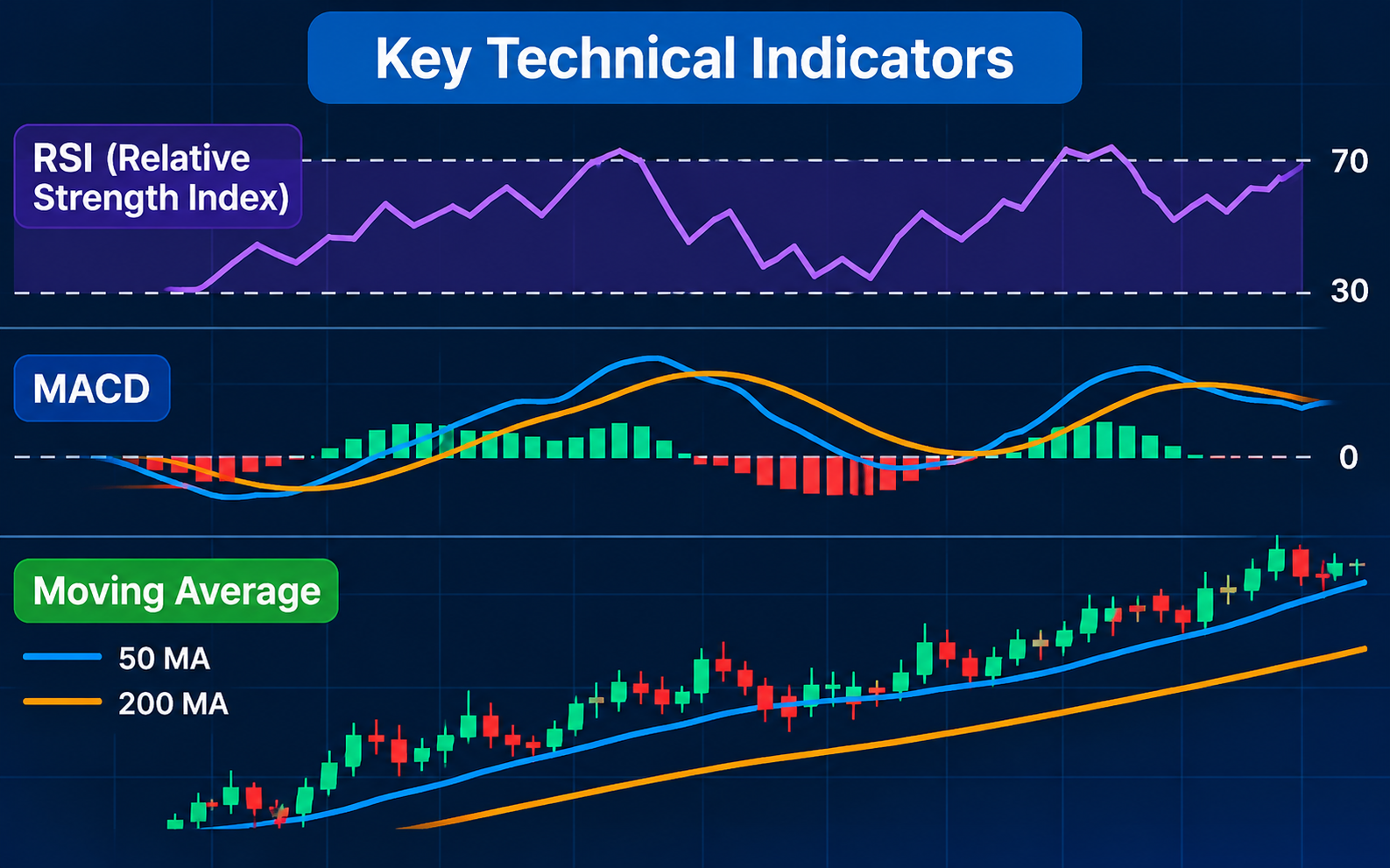
RSI allows traders to analyse how quickly and strongly a stock’s price is moving. It ranges from 0 to 100 and is commonly used to study potential overbought and oversold conditions.
Moving averages calculate the average price over a specific period. They help traders understand the general price trend.
MACD is a technical indicator that helps traders analyse price momentum and identify potential changes in market trends.
Volume shows the number of shares traded during a particular period. It helps traders understand the level of market participation behind a price movement.
No single technical indicator ensures profitable trades. Traders should learn to combine indicators with price movements and proper risk management techniques.
Swing trading and intraday trading are two different trading methods. The main difference is how long traders hold their positions.
Factors | Swing Trading | Intraday Trading |
Holding Period | Days or weeks | Same trading day |
Time Required | Regular monitoring | Frequent monitoring |
Trading Style | Short-term price movements | Daily price movements |
Analysis | Technical analysis and trends | Technical analysis and market movements |
Overnight Risk | Yes | Generally no, if positions are closed |
Both trading styles involve risk. The suitable approach depends on a person’s knowledge, time availability, and trading plan.
Swing trading offers several potential advantages:
Although swing trading offers potential opportunities, it also involves several risks.
Stock prices can change significantly between trading sessions because of news, announcements, or global market movements.
Sudden price movements can affect trading positions and result in losses.
A stock price may move above resistance or below support temporarily before reversing its direction.
Fear, greed, and overconfidence can influence trading decisions and lead to mistakes.
Stop-loss orders may not always execute at the expected price, particularly during sudden market movements or price gaps.
Understanding these risks is important before starting swing trading.
If you are new to swing trading, consider these basic guidelines:
1. Learn stock market fundamentals before starting.
2. Understand technical analysis and chart patterns.
3. Start by practising with a demo or paper trading account.
4. Decide your buying price, selling price, and stop-loss level before entering a trade.
5. Only invest money that you can afford to lose without affecting your financial needs.
6. Avoid making trading choices solely based on recommendations or tips shared on social media.
7. Keep a record of your trades to track and evaluate your trading performance.
8. Prioritise gaining trading knowledge instead of looking for fast profits.
Learning swing trading requires a basic understanding of the stock market, technical analysis, chart reading, and risk management.
Beginners should first focus on understanding these important topics:
1. Stock market fundamentals
2. Candlestick patterns
3. Support and resistance
4. Trend analysis
5. Technical indicators
6. Risk and money management
7. Trading psychology
If you are looking for structured stock market education and Malayalam trading classes, you can explore learning resources at Stock Market Kerala.
Understanding the basics and practising regularly can help beginners build stronger trading knowledge and decision-making skills.

1. Is swing trading suitable for beginners?
Yes, beginners can learn swing trading by understanding stock market fundamentals, technical analysis, and risk management. Beginners should gain practical experience before investing real money in trading.
2. How long do swing traders hold stocks?
Swing traders usually keep their stock positions for several days or weeks based on their trading plans and market movements.
3. How much money is required to start swing trading?
There is no fixed amount required for swing trading. It depends on the stock price, available capital, brokerage charges, and individual risk tolerance.
4. Is swing trading profitable
Swing trading can offer profit opportunities, but profits are not guaranteed. Market fluctuations and poor trading decisions can also lead to financial losses.
5. Which indicators are useful for swing trading?
Commonly used indicators include RSI, Moving Averages, MACD, and Volume. Traders should understand their limitations before using them.
Swing trading is a short-term trading method where traders seek to take advantage of stock price fluctuations over several days or weeks. It gives traders time to analyse market trends and make trading decisions without having to close their positions within the same day. For beginners, understanding technical analysis, studying market movements, and applying effective risk management techniques are essential for building strong trading knowledge. Start with the basics, practise regularly, and focus on building your understanding of the stock market before making trading decisions.